Buying Guide for the Best Rock Climbing Crash Pads
Choosing the right rock climbing crash pad is essential for ensuring your safety while bouldering. A crash pad, also known as a bouldering mat, is designed to cushion your fall and protect you from injuries. When selecting a crash pad, consider the type of climbing you do, the terrain, and your personal preferences. Here are some key specifications to help you make an informed decision.SizeThe size of a crash pad is important because it determines the area of protection it provides. Larger pads offer more coverage, which is beneficial for highball problems or when climbing in areas with uneven landings. Smaller pads are more portable and easier to carry, making them suitable for shorter climbs or when you need to hike to your climbing spot. Consider the type of climbs you do and the terrain to decide whether a larger or smaller pad is right for you.
ThicknessThickness affects the level of cushioning and impact absorption a crash pad provides. Thicker pads (around 4-5 inches) offer better protection for higher falls and rougher landings, making them ideal for more challenging climbs. Thinner pads (around 3 inches) are lighter and easier to transport but provide less cushioning. If you often climb highball problems or in areas with rocky landings, opt for a thicker pad. For shorter climbs or softer landings, a thinner pad may suffice.
Foam QualityThe quality of the foam inside the crash pad determines its durability and shock absorption. High-quality foam will maintain its shape and cushioning properties over time, providing consistent protection. Look for pads with a combination of closed-cell foam on top for impact resistance and open-cell foam underneath for cushioning. If you climb frequently or on rough terrain, investing in a pad with high-quality foam is essential for long-term performance and safety.
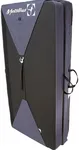
PortabilityPortability is crucial if you need to carry your crash pad over long distances. Features like shoulder straps, waist belts, and handles can make transporting the pad more comfortable. Some pads can be folded into a backpack-like shape, making them easier to carry. Consider how far you typically need to hike to your climbing spots and choose a pad with features that make it easier to transport.
DurabilityDurability is important because a crash pad needs to withstand rough use and exposure to the elements. Look for pads with a tough outer fabric, such as ballistic nylon, which resists tears and abrasions. Reinforced stitching and durable buckles also contribute to the pad's longevity. If you climb frequently or in harsh conditions, prioritize durability to ensure your pad lasts longer and continues to provide reliable protection.
Closure SystemThe closure system of a crash pad affects how securely it stays closed during transport and how easily it can be set up. Common closure systems include buckles, straps, and Velcro. Buckles and straps tend to be more secure and durable, while Velcro can be quicker to open and close but may wear out over time. Consider your preference for ease of use versus security when choosing a closure system.